
TIME TO READ: 2 MINUTES
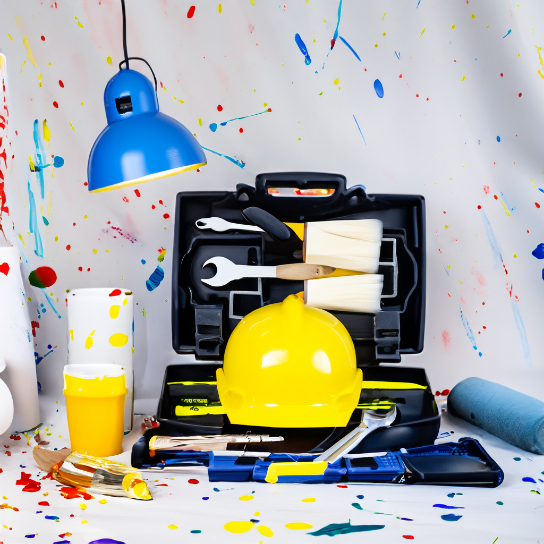
IMAGE PROMPT: designer’s tool box filled with lots of different tools on a bench with a lamp hanging down white space at top builders hard hat set square paint brushes background paint splattered wall with studio lighting
Generated in Photoshop 2024
AI has become more than just a buzzword, it’s an integral tool transforming how designers work, innovate, and deliver solutions. But with this rapid evolution, what about the future of design jobs and the role of designers in an increasingly AI-driven world?
Inspired by a course I completed recently on Advanced Creative Thinking and AI: Tools for Success, from Imperial College London, I decided to delve deeper into the AI vs Designers dilemma.
While some fear that AI will replace designers altogether, I think the reality is more nuanced. Rather than displacing human designers, AI is reshaping the nature of their work. Instead of being seen as a threat, AI is increasingly viewed as another essential tool in the designer’s toolbox. Designers are using AI to enhance their creativity, improve efficiency, and explore new exciting possibilities.
With AI technologies like machine learning and generative design, designers now have access to powerful tools that can enhance their capabilities and streamline workflows. Tasks that once demanded hours of manual labour, such as image editing, layout optimisation, can now be automated, allowing designers to focus more on ideas, concepts, innovation and collaboration. It’s revolutionising job roles and freeing time for creativity.
However, the question remains: Will AI eventually replace designers? The answer lies in understanding that AI is not a substitute for human creativity; rather, it’s a catalyst for innovation. While AI can automate certain aspects of the design process, I believe it cannot replicate the depth of human emotion, intuition, and cultural understanding that designers bring to their work. Moreover, AI lacks the ability to form entirely original ideas or understand the broader context of a design project.
However, to succeed in this AI-driven landscape, I think designers must embrace this new technology and adapt to its possibilities. Those who resist or ignore AI risk being left behind in an increasingly competitive market. Instead of fearing displacement, designers should see AI as an opportunity to evolve their skill sets, explore new avenues of creativity, and deliver more value to their clients.
The impact of AI on the design community is profound and multifaceted. While it’s reshaping job roles and workflows, AI is not a threat to designers but rather a powerful ally in their quest for innovation. To thrive in this AI-driven era, designers must embrace technology, adapt to new methodologies, and continue to push the boundaries of creativity. By doing so, they can ensure their relevance and significance in an increasingly digital and interconnected world.
Blog outline written first with ChatGPT and Grammarly….and then enhanced and edited by a real human.

©Jennifer Martin 2024
 Jennifer Martin Design